Are Cockapoos Hard to Train? Why "Easy to Train" Is the Most Dangerous Myth in Doodle Ownership
 Victoria Cooper

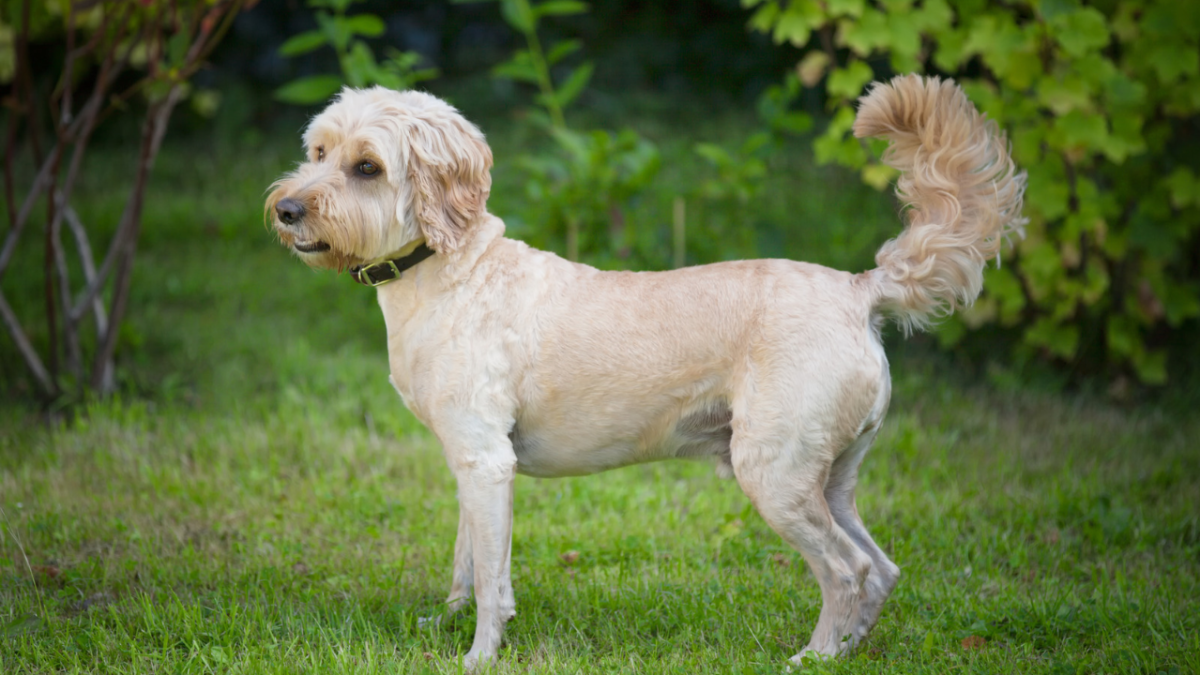
Cockapoos are sold as easy to train. UK research suggests that belief is part of the problem. A force-free behaviourist explains what's really going on.
Ask most people what a Cockapoo is like and you'll hear the same list. Friendly. Clever. Doesn't moult much. Easy to train.
Three of those are broadly fair. The fourth is causing more problems than any other single belief in Doodle ownership, and I'd like to explain why.
The uncomfortable finding
Research following UK dogs acquired during the pandemic found something that should give all of us pause.
Owners who believed their breed was easy to train were more likely to use aversive training methods, shouting, physically moving the dog, lead corrections, than owners who didn't hold that belief. [Read more here].
Read that again, because it's counterintuitive. You'd expect the opposite. You'd expect someone who thinks training will be straightforward to be relaxed about it.
But think about what happens when the expectation doesn't match the dog in front of you.
Why the belief backfires
If you've been told your dog is easy to train, then when training doesn't work, there's only one place left to put the blame.
Either the dog is being stubborn, or you're doing it wrong.
Both conclusions lead somewhere unhelpful. "He's being stubborn" leads to making him do it, the lead correction, the firmer hand, the raised voice. "I'm doing it wrong" leads to frustration, inconsistency, and eventually to asking the internet, where somebody will confidently tell you to show him who's boss.
Neither conclusion considers the third possibility: that the dog is doing something entirely reasonable for a dog of his breeding, and nobody told you to expect it.
What a Cockapoo actually is
Here's the bit that gets lost in the marketing.
A Cockapoo is a Cocker Spaniel crossed with a Poodle. Both parent breeds are working dogs. Both were bred to spend their days doing a job alongside a person, using their nose, their brain and their body.
The Poodle side is not the decorative animal people assume. Poodles are water retrievers, intelligent, analytical, and quick to work out whether a given instruction is worth following. They bore of repetition. They notice when the rules change. They'll happily do what you ask when there's a reason to, and will equally happily look at you blankly when there isn't.
The Cocker side brings a nose that is always working, a strong motivation to find and carry things, and a sensitivity that means harsh handling lands harder than people expect.
Put those together and you get a dog who learns extremely fast which is precisely the problem.
"Easy to train" means "learns quickly"
And a dog who learns quickly learns everything quickly. Including the things you didn't mean to teach.
That barking at the window works, because the postman always leaves. That jumping up gets attention, even if the attention is you pushing them down. That the lead coming out predicts something exciting, so pulling is worth it. That taking the sock into the other room means the game lasts longer.
None of that is a training failure. That's a very clever dog drawing accurate conclusions from the evidence available.
The owner of a slower-learning breed often gets more room for error. The Cockapoo owner doesn't, because by the time they've noticed the problem, the dog has practised it four hundred times and got good at it.
So are they hard to train?
No. But they're easy to train badly, and that's a different thing entirely.
What they need isn't more discipline or a firmer hand. It's three things most owners aren't told about:
Management before training. If a behaviour is being rehearsed daily, you can't out-train it. Block the window, move the bin, close the door. You're not giving in, you're stopping the dog practising something you're trying to change.
Understanding what's driving it. A dog who pulls because they're excited needs something different from a dog who pulls because they're anxious. Same behaviour, different cause, different answer. Treating all pulling as a training problem is why so much advice fails.
Meeting the needs of a working dog. Sniffing, searching, chewing, carrying, problem-solving. These aren't optional extras for a Doodle, they're what the dog was built to do. A Cockapoo who has had no mental work all day will find their own, and you probably won't like their choice.
Where this leaves you
If you've got a Cockapoo and things are harder than you expected, you haven't failed and your dog isn't difficult.
You've got a clever, sensitive working dog in a pet home, and almost nobody warned you what that would involve.
The good news is that the same intelligence that makes them easy to train badly makes them extraordinarily satisfying to train well. Once you stop asking them to comply and start giving them reasons, most Cockapoos become genuinely delightful to work with.
They just need you to stop expecting a dog who does what they're told, and start appreciating one who wants to know why.
Victoria Cooper is a Certified Canine Behaviourist specialising in Cockapoos and Doodles. The Doodle Dog Academy is a monthly membership offering live expert sessions, Q&As and training resources for Doodle owners. [Find out more.]