Fireworks and Your Doodle: Why Cockapoos Are More Prone to Noise Sensitivity
 Victoria Cooper

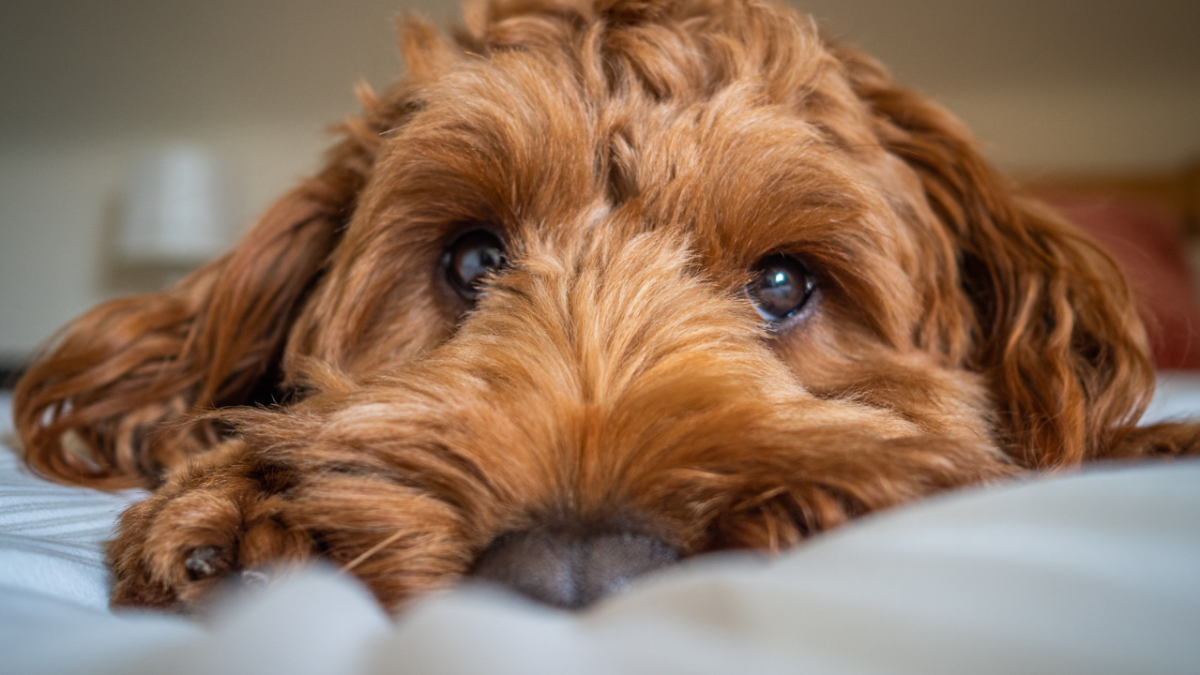
Sound sensitivity runs in spaniel and poodle lines, so Doodles are often more affected than owners expect. What to do before Bonfire Night.
If your Doodle struggled last year, this is the week to do something about it.
Not because there's a quick fix, there isn't but because almost everything that helps works better when it's in place before the first bang, and considerably less well once your dog is already frightened. The earlier you start the better.
Why Doodles in particular
Here's something that rarely gets mentioned when people are choosing a Cockapoo.
Sound sensitivity has a well-documented hereditary component, and it appears more often in some breed lines than others. Both sides of the Doodle cross come from working stock bred to be alert and responsive to their environment, spaniels working close to the gun, poodles as water retrievers. These are dogs selected over generations to notice things.
That same quality that makes your dog notice the post arriving three houses away makes them notice a firework four streets over.
It isn't a flaw and it isn't something you caused. It's a dog whose hearing and alertness are doing exactly what they were bred to do, in an environment that nobody bred them for.
What noise fear actually looks like
Most people recognise the obvious signs. Trembling, hiding, panting, pacing, trying to get out of the room or under furniture.
What's missed far more often is the quieter version:
- Refusing to go out for their last toilet of the evening
- Not eating, or eating much more slowly than usual
- Going very still and watchful rather than settling
- Sticking to you more closely than normal
- Waking in the night, or struggling to settle at all
- Being noticeably more reactive on walks for days afterwards
That last one catches owners out. A dog whose stress hormones have been elevated by a frightening evening doesn't reset by morning. It can take several days, which is why the week after Bonfire Night often produces behaviour that seems to come from nowhere.
What to do now — before the bangs start
Build the den today, not on the night. Your dog needs somewhere they've chosen, that feels enclosed, away from windows and ideally in the quietest part of the house. Put a bed in it, leave the door open, feed them in there, and let them use it voluntarily for a week or two before they need it. A den introduced on the evening of the 5th is just a strange new box.
Never shut them in. The whole point is that they can get in and out. A frightened dog who can't escape gets more frightened.
Work out the walk. Walk early, in daylight, and be prepared to shorten walks or skip them entirely on the worst nights. A missed walk does no harm whatsoever. A terrifying experience in the dark can shape behaviour for years.
Check the garden now. More dogs go missing around Bonfire Night than at almost any other time. Check fences and gates, and never let your dog out unaccompanied after dark during firework season.
Talk to your vet, and do it this week. If your dog was genuinely distressed last year, there are things that can help and they need discussing in advance, not on the night. Pheromone products and supplements take time to build up. Any medication needs a proper conversation. Your vet is the person for this and they'd far rather see you in October than take a panicked call on the 5th.
On the night
Close the curtains and put something on. Flashes are part of what frightens dogs, not just the noise. Background sound — television, radio, music — helps mask the bangs without needing to be loud.
Let them choose where to be. If they want to be under the bed, let them be under the bed. If they want to be pressed against you, let them. If they want to be in the bathroom with the door open, fine.
You can comfort your dog. The old advice that reassuring a frightened dog reinforces the fear is wrong, and it has caused a lot of unnecessary misery. Fear isn't a behaviour being rewarded, it's an emotion. If your dog comes to you, comfort them. If they'd rather be alone, don't force contact.
Offer something to chew or lick. Chewing and licking are genuinely calming for dogs. A stuffed Kong or a lickimat gives them something to do with the adrenaline. Don't be surprised if they won't take it — a dog who's too frightened to eat is telling you something useful.
Stay calm yourself. Not performatively cheerful, which dogs read as odd, just normal. Your dog is watching you for information about whether this is serious.
What not to do
Don't force them out to the garden. If they won't go, they won't go. One missed wee is less damaging than a frightening experience in the dark.
Don't tell them off. For pacing, whining, barking, or an accident indoors. None of that is deliberate, and punishment adds fear to an already frightened dog.
Don't try to "get them used to it" on the night. Taking a frightened dog outside to show them the fireworks are harmless is flooding, and it reliably makes things worse.
Don't assume they'll grow out of it. Noise fear tends to worsen over time if left alone, not improve.
The longer-term work
Once firework season is over, that's when the real work starts and it's genuinely effective.
Sound desensitisation involves playing recordings at a volume so low your dog barely registers them, paired with something good, and building up over weeks or months. Done properly it works well. Done too fast it backfires, which is why it's worth getting guidance rather than improvising.
The best time to start is January, when there's a clear run before next autumn.
One thing worth checking
If your dog's noise sensitivity has appeared suddenly, or got noticeably worse rather than better with age, it's worth a vet check.
There's a well-recognised link between pain and sound sensitivity. A dog who startles and tenses when something already hurts has a worse experience than a comfortable dog, and over time that association builds. It's one of the more common hidden causes of a fear that seems to come from nowhere.
Victoria Cooper is a Certified Canine Behaviourist specialising in Cockapoos and Doodles. The Doodle Dog Academy offers monthly live expert sessions, Q&As and training resources for Doodle owners. [Find out more.]