Why Does My Dog Growl When I Put Their Harness On?
 Victoria Cooper
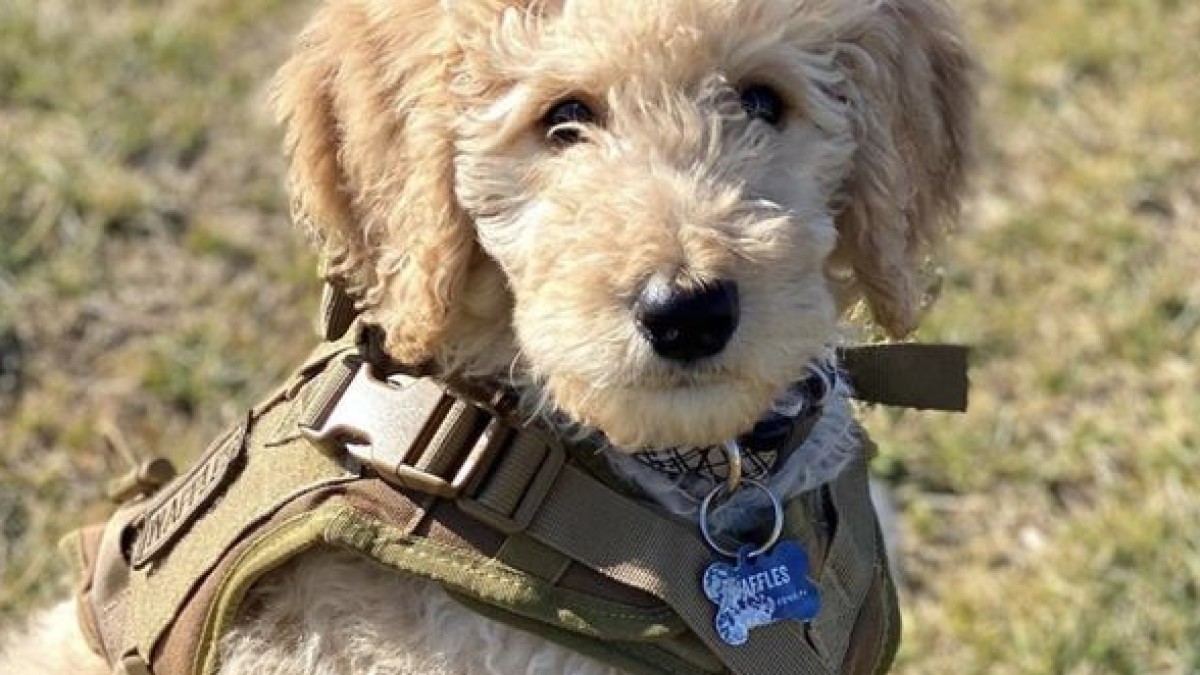
Does your Cockapoo or doodle growl, freeze,or hide when the harness appears? Understand harness anxiety and discover gentle ways to help.
Why Does My Dog Growl When I Put Their Harness On?
You pick up the harness and your Cockapoo disappears behind the sofa. Perhaps your doodle freezes, turns their head away or growls when you reach to fasten it.
These responses can be puzzling, particularly when your dog enjoys their walks. But enjoying a walk and feeling comfortable having a harness put on are two different things.
I encourage owners to see these behaviours as information: something about the experience may feel uncomfortable, worrying or difficult.
Why might your dog dislike their harness?
There are several possibilities:
- Handling worries: hands reaching over the head, under the chest or around the legs may feel intrusive.
- The harness itself: a small head opening, rubbing straps or restricted movement may cause discomfort.
- Pain or skin sensitivity: touching or moving part of the body may hurt.
- An uncomfortable association: the harness may predict a stressful walk, car journey or close encounters with other dogs.
Rather than assuming your dog is being awkward, I would consider both their physical comfort and what the harness has come to mean to them.
If this behaviour is new, worsening or accompanied by other changes, arrange a veterinary assessment. Training cannot resolve an underlying source of pain.
Look for the quieter signs
Growling may be preceded by more subtle communication. Your dog might move away, turn their head, lower their body or become unusually still.
Stillness does not necessarily mean acceptance. A dog who stands rigidly while you fasten the harness may be tolerating the experience rather than feeling comfortable.
Look at the whole body and the situation. No single gesture tells us everything about how a dog feels.
What can you do to help?
First, pause the struggle. Avoid chasing, cornering or holding your dog still to get the harness on. If they growl, stop and give them space. Punishing that warning does not address the underlying concern.
Check fit and comfort. Consider whether the harness rubs, catches coat or restricts movement. A design that opens around the neck may help a dog who dislikes putting their head through an opening.
Practise separately from walks. Choose a quiet moment when you are not rushing to leave. Begin with the harness far enough away that your dog remains comfortable. Let them notice it, offer a treat and put it away.
Break the process into small steps. Seeing the harness, approaching it, accepting it near the body and hearing the clips are separate learning tasks. Progress at your dog’s pace and allow them to move away.
I would avoid using food to lure a worried dog into position and then quickly fastening the harness. The aim is to build confidence throughout the process.
If your dog snaps, attempts to bite or remains distressed, seek individual behaviour support alongside veterinary advice.
Understanding makes everyday care easier
Helping your dog feel comfortable with a harness begins with listening to their communication, checking their comfort and making the experience more predictable.
If you would like to understand your Cockapoo or doodle more deeply, join me in the Doodle Dog Academy. Through force-free guidance, webinars and practical resources, I help owners understand behaviour and support their dogs with everyday challenges, including handling and grooming.
Victoria Cooper, Certified Canine Behaviourist
Further reading: Dogs Trust: helping your dog feel comfortable wearing a harness.